Traditional aviation insurance makes one fundamental assumption: the pilot can see what they’re flying.
Direct line of sight. Peripheral vision. Spatial awareness built from decades of manned flights.
Drone insurance throws all of that out the window.
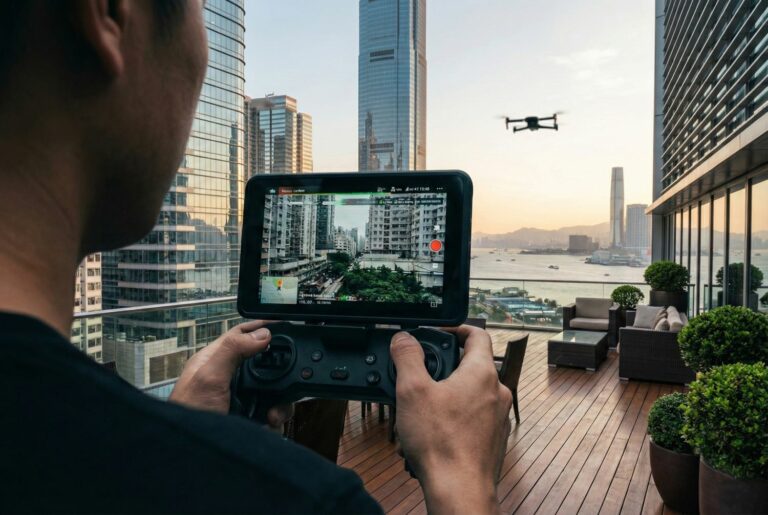
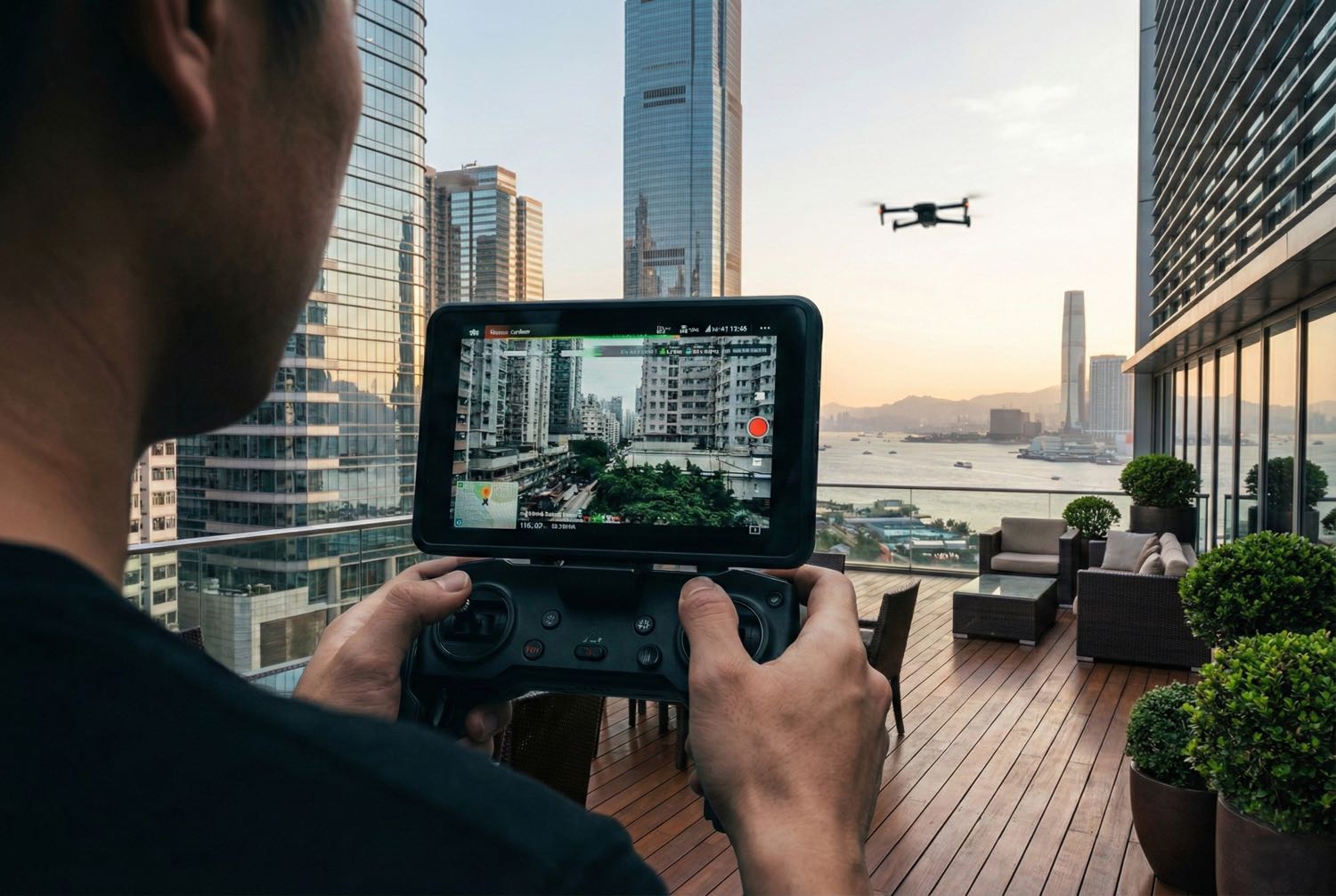
We’re insuring operators who watch screens, not always what is in the skies. They navigate through camera feeds that capture one direction, maybe two if they’re lucky. What happens when the feed delays by half a second? When signal interference pixelates the image at the critical moment? When buildings, trees, or architecture create blind spots the cameras never catch?
These aren’t theoretical concerns.
Since May 2022, Hong Kong’s Civil Aviation Department requires drone operators to carry liability insurance with minimum cover of HK$10 million. Small Unmanned Aircraft, drones, create liability scenarios that traditional aviation never contemplated.
The Experience Factor Nobody Talks About
Think about someone who just passed their driving test.
They have the credentials. They know the rules. But road sense? That takes time.
Drone operation works the same way. An operator might understand all the technical requirements, but experience determines whether they anticipate the unexpected.
We’ve seen this play out in ways that surprise even seasoned operators.
One case involved a drone cleaning building exteriors. Standard operation, experienced crew, proper equipment. The drone was tethered to pump cleaning solution up from the ground. Everything by the book.
Then someone inside the building started shouting at the operator through an open window.
The interior had become wet from the cleaning process. The person shouting slipped on the soapy floor and fell out the window.
The insurance policy had to cover internal property damage and bodily injury. The person who became the claimant was the one protesting the operation.
This is what we mean when we talk about unexpected liability chains.
Why Weight Changes Everything
That building cleaning example reveals something else operators often miss.
When you tether a drone to pump cleaning solution, you’re not just adding equipment. You’re fundamentally changing the risk profile.
The additional weight slows the drone. Manoeuvrability decreases. The physical tether creates movement constraints that don’t exist in standard operations.
We price these factors differently because they matter differently.
Each insurance policy accounts for three core elements: operator experience, drone size and weight, and intended use. But it’s the interaction between these factors that determines actual risk exposure.
A lightweight consumer drone in experienced hands carries different risk than the same drone operated by someone fresh from certification. Add commercial applications with tethering or specialised equipment, and the risk profile shifts again.
The Compliance Gap
Hong Kong registered 5,900 remote pilots and 4,700 small drones when the HK$10 million insurance mandate took effect.
But only 15 to 20 percent of approximately 50,000 drone owners actually registered their devices. The compliance gap stems partly from cost concerns, with annual premiums exceeding HK$1,000.
More fundamentally, many operators see insurance as a tick-box requirement.
Commercial operators applying for CAD licences tend to think more seriously about exposure. The licensing process forces consideration of what could go wrong.
But recreational operators and small commercial users often carry minimum coverage without understanding what it actually protects.
They have a liability policy and assume everything is covered.
Every insurance policy has exclusions. Drone policies are no exception.
What Operators Don’t Report
We tell clients to inform us of any changes to their drone, technology advances, or operational use.
Most nod and agree. Then they add a new camera system without calling. They start flying in slightly different environments and don’t think to mention it.
The changes seem minor from their perspective.
From ours, they can void coverage entirely.
Take no-fly zones. An operator decides to capture footage in the countryside. Beautiful scenery, seemingly low risk. But that area might be restricted by the Civil Aviation Department.
Pylons and telegraph poles create collision risks affecting power infrastructure. Aircraft flight paths overhead create interference concerns.
If you’re operating in a no-fly zone, the policy doesn’t operate. Full stop.
This isn’t about catching operators in technicalities. It’s about helping them understand that material changes to the original risk assessment require insurer notification.
The insurer has a chance to reconsider the risks and how coverage can apply. But only if they know about the changes.
The Real Injury Pattern
Drone incidents are increasing. DroneSec reported 223 incidents in November 2022 alone, representing a 130% increase from January that same year.
The injury statistics tell a specific story: 72% of drone injuries are lacerations, with arms and hands most commonly affected.
Landing phase creates particular vulnerability. Operators reach for their equipment at the moment when rotors are still active and spatial judgment becomes imprecise.
Twenty-one percent of injuries occur in individuals under 18. The democratisation of drone technology means younger operators with less developed risk assessment capabilities.
We’re not insuring professional pilots with years of training and standardised safety protocols. We’re insuring a spectrum from hobbyists to small business owners to commercial operators, each with different experience levels and risk awareness.
Beyond Hull and Liability
Traditional drone coverage focuses on two areas: physical damage to the aircraft and liability for property damage or bodily injury.
Sophisticated operators are asking about different concerns now.
What happens when they’re flying in unusual locations? Tunnels, for example, where GPS signals disappear and manual control becomes critical.
What about data protection when drones capture footage in populated areas? Privacy breaches create liability exposure that didn’t exist in traditional aviation.
Cyber vulnerabilities matter when drones connect to networks and store data in cloud systems. Signal hijacking or data theft scenarios require coverage frameworks that traditional aviation policies never contemplated.
The drone insurance market is responding. Global valuation reached $1.44 billion in 2024 and projects to $2.33 billion by 2029, reflecting 10.3% compound annual growth.
Agriculture accounts for 25% of commercial drone insurance policies. Media and entertainment follow with 20%. Each sector brings unique risk profiles requiring specialised underwriting.
How We Structure Adaptive Coverage
We approach drone insurance through consultation, not transaction.
The first conversation focuses on understanding how you actually use your drone. Not just the technical specifications, but the operational reality.
Are you flying in urban environments with dense populations? Rural areas with infrastructure concerns? Coastal regions with weather variability?
What’s your experience level? Not just certification, but practical flight hours and incident history.
What applications are you running? Standard photography differs from building maintenance, which differs from agricultural surveying, which differs from inspection work in confined spaces.
We use this understanding to structure coverage that addresses your actual exposure.
Then we build in flexibility for technology changes and application evolution. The drone industry moves quickly. Your coverage needs to keep pace.
When you add equipment, modify operations, or explore new applications, we reassess risk and adjust coverage accordingly. This requires communication from both sides.
You inform us of material changes. We evaluate how those changes affect your risk profile and coverage structure.
The Regulatory Environment Keeps Shifting
Hong Kong’s HK$10 million minimum represents one jurisdiction’s approach.
Other regions impose different requirements. Some mandate insurance for commercial operations only. Others require coverage for any drone above a certain weight threshold.
Penalties vary dramatically. Hong Kong’s HK$100,000 fine and potential two-year imprisonment demonstrate serious enforcement intent.
We help operators navigate these requirements when they work across borders. Your home jurisdiction’s coverage might not satisfy another region’s mandates.
Worldwide coverage becomes essential for operators who travel with their equipment or conduct cross-border operations.
The regulatory landscape will continue evolving as drone usage proliferates and incident data accumulates. Insurance requirements will tighten in some jurisdictions, potentially relax in others as the industry matures.
Our role involves staying ahead of these changes and ensuring your coverage remains compliant wherever you operate.
What Experience Actually Teaches
We’ve structured policies for operators across the risk spectrum.
The patterns are clear. Experienced operators anticipate problems before they materialise. They understand how weather affects flight characteristics. They recognise when environmental conditions create elevated risk.
They also know their limitations.
Inexperienced operators often overestimate their capabilities. The newly certified pilot who thinks credentials equal competence. The hobbyist who graduates to commercial work without recognising the risk increase.
This is why we factor experience heavily into premium calculations. Not to penalise new operators, but to accurately reflect the statistical reality of incident patterns.
As operators gain experience and demonstrate consistent safe operation, premiums adjust accordingly. Risk profiles improve with flight hours and incident-free records.
The Coverage Conversation You Need
Most operators approach insurance with one question: what’s the minimum coverage required?
We start with a different question: what’s your actual exposure?
Minimum coverage satisfies regulatory requirements. But it might leave significant gaps in protection.
That building cleaning case with the person falling from the window? The bodily injury claim alone could exceed basic coverage limits. Add property damage, legal defence costs, and potential business interruption, and minimum coverage evaporates quickly.
We help you understand the difference between compliance and protection.
Then we structure coverage that addresses both. Regulatory requirements form the baseline. Your operational risk profile determines the appropriate coverage level.
This approach requires honest assessment of how you actually use your drone, not how you think you use it or how you’d like to use it.
Where do you fly? What conditions do you operate in? What could realistically go wrong? What’s the worst-case scenario, and can you absorb that financial impact?
These conversations feel uncomfortable sometimes. Nobody wants to contemplate their drone causing serious injury or significant property damage.
But that discomfort is precisely why insurance exists.
Looking Forward
Drone technology continues advancing. Applications multiply. The industry matures.
Insurance frameworks will adapt accordingly. Usage-based pricing models will become more sophisticated as data accumulates. AI and analytics will refine risk assessment beyond the current experience-weight-application formula.
Regulatory requirements will tighten in some jurisdictions as incident data reveals patterns. Other regions might relax restrictions as safe operation becomes more standardised.
What won’t change is the fundamental difference between drone insurance and traditional aviation coverage.
We’re insuring operators who navigate through camera feeds with inherent blind spots. Who face liability scenarios that don’t exist in manned flight. Who operate in environments and applications that traditional aviation never contemplated.
The visibility constraints remain. The experience gap persists. The unexpected liability chains continue emerging.
Our approach stays focused on understanding your specific operational reality and structuring coverage that protects against the risks you actually face.
Not the risks traditional aviation insurance was designed for. The ones that emerge when small unmanned aircraft operate in the real world, flown by operators with varying experience levels, in applications that didn’t exist five years ago.
That’s the insurance conversation worth having.