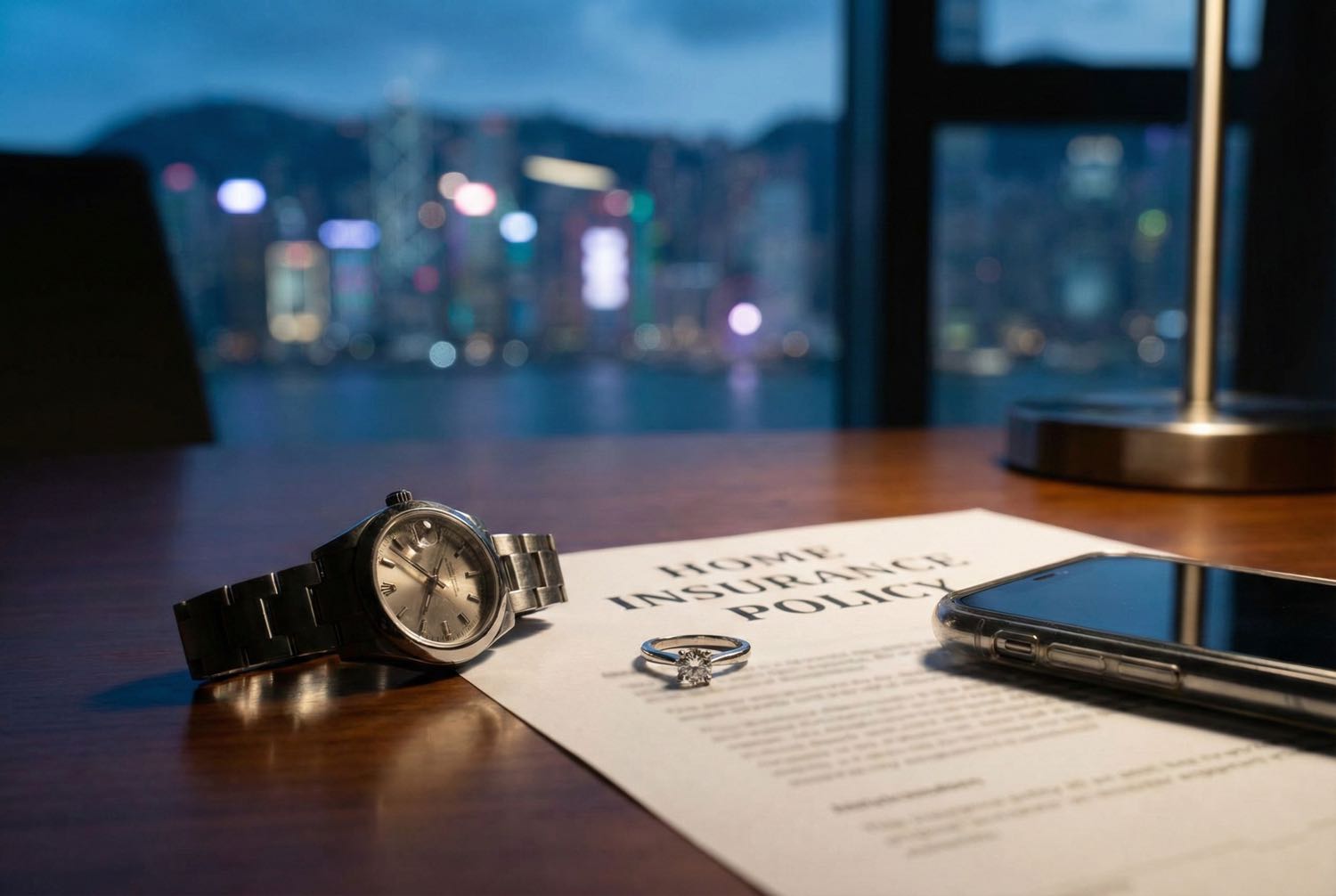
I ask every client the same two questions when they mention home contents insurance.
What’s the total value of your jewellery collection? And what are your most valuable individual pieces worth?
The answers usually reveal a problem they didn’t know existed.
Most items sit well above the limits their standard policy actually covers. Sometimes there’s no coverage at all for certain valuables, especially when taken outside the home.
The discovery typically happens at the worst possible moment.
The Moment Everything Changes
Someone loses their smartphone. They contact me ready to file a claim.
That’s when they learn the device isn’t covered. It was never listed on their policy.
The conversation shifts immediately. What they assumed was comprehensive protection turns out to have significant gaps.
Standard home insurance policies often cap jewellery and valuables at surprisingly low thresholds. In Hong Kong, HK$5,000 is common.
A single engagement ring averages well above these limits. A quality watch exceeds them by multiples.
The Specification Requirement Nobody Mentions
Here’s what “specified” actually means.
Each valuable item must be listed individually on your policy. You declare it, provide its value, and pay an additional premium for that specific piece.
Without specification, your HK$30,000 watch falls under the standard HK$15,000 jewellery limit. You’d receive HK$15,000 maximum in a claim, regardless of the watch’s actual value.
The coverage distinction extends beyond simple thresholds. Most policies differentiate between items kept at home versus taken outside.
Some provide zero coverage for valuables, jewellery, watches, and electronics like smartphones, tablets, and smartwatches when they leave your home.
This creates a substantial protection gap for items people use daily.
When Everyday Items Cost Luxury Prices
The insurance conversation has changed dramatically in recent years.
Premium smartphones and smartwatches now routinely cost HK$ 10,000. These aren’t luxury purchases anymore. They’re standard technology many people carry constantly.
Insurers treat them cautiously. The items are expensive and remarkably easy to lose.
Research shows fraudulent mobile phone claims increased 63% between 2018 and 2019. High-value electronics attract both genuine losses and fraudulent activity at volumes traditional jewellery never matched.
That’s why most insurers require smartphones and smartwatches to be specified separately. You pay additional premiums for coverage.
The risk profile resembles traditional valuables. A vintage Rolex and an Apple Watch are both expensive, portable, and attractive to thieves.
But here’s the crucial difference.
Not everyone owns a Rolex. Nearly everyone carries a smartphone or wears a smartwatch. The volume changes everything for insurers calculating risk exposure.
The Coverage Assessment You Need
I walk clients through a straightforward evaluation.
First, identify any items worth more than your policy’s standard limits. These need specification regardless of where you keep them.
Second, consider usage patterns. Do you wear these items regularly outside your home? Or do they stay secured in a safe most of the time?
If you wear jewellery, watches, or carry expensive electronics outside your home regularly, you need coverage that travels with you.
If pieces rarely leave your home and stay in secure storage, home-only coverage might suffice.
The distinction matters significantly for both protection and premium costs.
Why The Gaps Exist
Standard home contents insurance was designed for typical household possessions. Furniture, appliances, clothing, basic electronics.
High-value portable items present different risks. They’re small, easily concealed, attractive to thieves, and often irreplaceable due to sentimental value.
They also fluctuate in value. Gold has increased 112% over the past decade. Luxury watches appreciate. Even diamonds shift in market value.
Insurers manage these risks through specification requirements and coverage limits. It’s not arbitrary. It reflects claims data, fraud patterns, and the fundamental challenge of insuring highly portable valuable items.
Industry estimates suggest upwards of 70% of people lack adequate insurance coverage on their jewellery, watches, and valuables for like-for-like replacement.
The underinsurance problem surfaces almost exclusively during claims. By then, the gap between assumed coverage and actual protection becomes painfully clear.
Building Proper Protection
Dedicated jewellery and valuables insurance exists specifically to address these gaps.
These policies offer comprehensive worldwide coverage. Your items are protected whether kept at home, worn whilst travelling, or stored elsewhere.
They typically cover broader risks than standard home insurance. The coverage follows your possessions rather than just protecting your dwelling.
You can structure coverage in two main ways.
Scheduled coverage lists each item individually with specific values. You know exactly what’s protected and for how much.
Blanket coverage protects collections under a single sum insured. This works well for multiple pieces of similar value.
Both approaches require professional appraisals and detailed documentation. Photographs, descriptions, certificates of authenticity, and purchase receipts establish value and facilitate claims.
These aren’t bureaucratic requirements. They’re practical necessities when insuring items whose value can’t be easily verified after loss.
The Practical Path Forward
Start by cataloguing your valuables. Note individual values and total collection worth.
Compare these figures against your current policy limits. Check both overall jewellery limits and single-item caps.
Review your policy’s geographic coverage. Does protection extend outside your home? Are there exclusions for certain item types?
Consider your actual usage patterns. Which items leave your home regularly? Which stay secured?
Based on this assessment, you’ll know whether your current coverage suffices or whether specification and dedicated valuables insurance make sense.
The conversation becomes straightforward once you understand the numbers and your needs.
Most people discover their coverage gaps by accident, often during claims when options are limited.
Better to identify and address these gaps proactively. The protection you think you have should match the protection you actually need.